2. november 2026
Raising the cost of attacking journalists

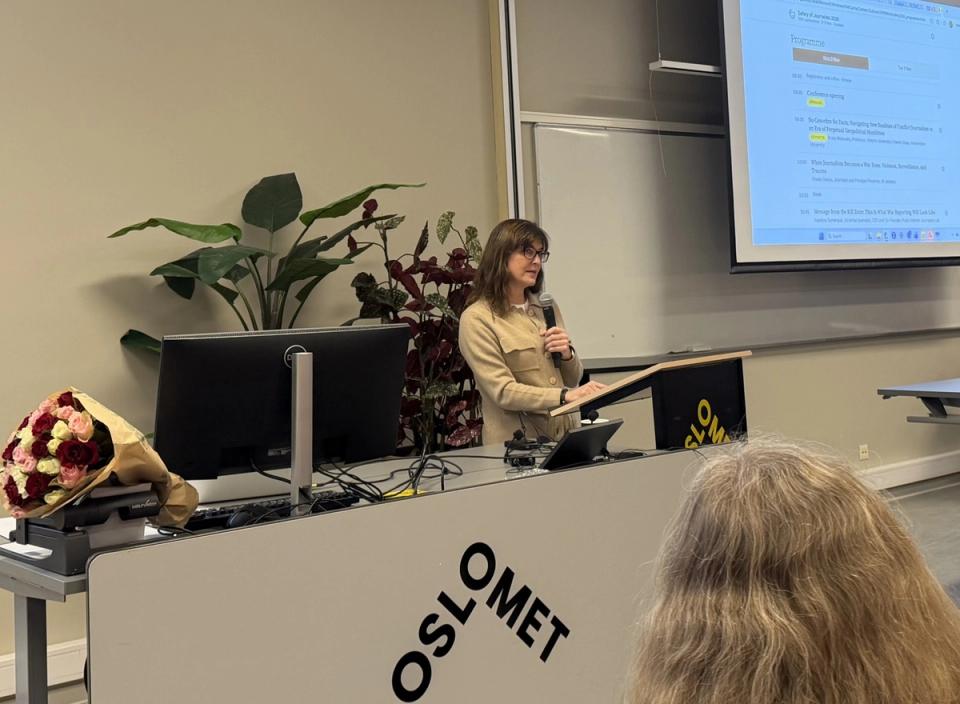
Kjersti Løken Stavrum, CEO of the Tinius Trust, gave opening remarks at the 12th International Conference on the Safety of Journalists at OsloMet. Read her speech here:
Good morning. Thank you to MEKK at OsloMet, the Fritt Ord Foundation and UNESCO Norway for the invitation. And for bringing all of us together on this International Day to End Impunity for Crimes against journalists.
The vest marked PRESS was meant to carry a simple message: this person is a civilian, here to observe and report, not to fight.
In too many places today, that message is no longer respected. For some, the vest itself has become a reason to shoot.
Many in this room know the figures from the Committee to Protect Journalists better than I do, so let me pick out only a few of the numbers. Since October 2023, CPJ has documented at least 247 journalists and media workers killed in Gaza, Lebanon, Yemen and Iran. To put that in a Norwegian perspective: the Norwegian Union of Journalists has around 8,600 members. A loss on that scale here would mean roughly one in every 35 of them – in three years.
In Gaza, where international reporters are still barred from entering independently, local journalists have carried the burden of reporting the war to the world - and many have paid with their lives. Journalists have also been killed in Sudan and in Ukraine, increasingly by drones. So far this year, CPJ has registered 34 journalists and media workers killed in cases confirmed or suspected to be connected to their work.
Behind each number is a person who stayed when others left – or had to leave. And each killing is more than a personal tragedy. It is an attack on the public's right to know. A war without independent witnesses is a war in which anything can be claimed, and nothing can be checked.
Two questions therefore need answering at the same time. How can the risk be raised for those who put journalists in danger? And what can the profession itself do to strengthen its own safety? The law is, thankfully, on the side of journalists.
What is missing is a wider recognition that attacking a journalist is not only a legal violation, but a moral one - a breach of everyone's right to know what is happening in the world.
I see four things that can make a difference. The first concerns those who commit the attacks; the other three concern the profession itself.
First: those who commit crimes against journalists must be pursued far more systematically. Journalists in war are civilians, and deliberately attacking them is a war crime. Yet of the journalists CPJ found to have been deliberately killed for their work last year, no one has been held accountable in a single case. That must change. It requires careful documentation from the very first hour, states willing to investigate and prosecute, and the patience to pursue cases over many years - because the perpetrators count on the world forgetting. Impunity is not merely an absence of consequences. It is an invitation. I think there is a need for civil society to restructure the way we approach those crimes.
Second: the recognition of the professional journalist must be strengthened. It is less clear today who is reporting in the field. That anyone with a phone can document what is happening is, in principle, a strength. Much of what the world knows from conflict zones comes from people who never trained as reporters. But it must not mean that more people are exposed to danger without training, protection or an editorial organization behind them.
Nor must it blur the line between those who report and those who fight. This year, CPJ reviewed its records from Gaza and removed several names after establishing that they had taken part in combat. That matters, because every misuse of press credentials weakens the protection of everyone who depends on them.
"Journalist" is not a protected title. That is precisely why professional journalists must guard their integrity and professionalism to the utmost. In conflict, the credibility of the profession is part of its protection.
Third: professional journalists must hold themselves to professional ethics. In practice, that means verifying before publishing - even under intense pressure to be first, and even when the material comes from a side one sympathizes with. It means – as you well know - separating facts from opinions, and what is known from what is believed. It means independence from the parties in the conflict: not wearing their uniform, not carrying their weapons, not taking their instructions or their money. It means protecting sources, who in war may risk their lives by speaking. It means respecting the dignity of victims and of the dead. And it means correcting errors openly and quickly.
Better still is to belong to an established and recognized system of press ethics – a shared code, and a press council or similar body where anyone can complain and where decisions are made public. That turns a personal commitment into one that others can hold to account, and it gives the claim to be a professional journalist real substance.
These are not bureaucratic rules. In war, they are what separates journalism from propaganda - and the protection the law offers rests on that distinction.
Fourth: professional journalists must be as open and transparent as possible about their work and their findings. That means explaining how they know what they know, saying what they could not verify, and showing their sources where it is safe to do so. It means explaining the choices behind the account they present, so that audiences can understand it - and challenge it.
Journalism must not be hidden political activism. Bias must be fought, including one's own. And fighting bias means more than balance in a single story. It means understanding the depth and complexity of a war: its history, its many parties, the civilians caught between them. This matters most in the conflicts that last for years, where audiences grow exhausted and lose interest, and where coverage easily shrinks to a few familiar images and a simple story of right and wrong.
Staying with a conflict and continuing to explain it when attention has moved elsewhere, is part of the professional obligation.
Transparency is not a weakness. At a time when every image is contested and every report is dismissed as fake by someone, it is how trust is earned.
This is a critical time for professional journalism. Information itself has become a battlefield, and those who wage war also fight over the narrative. Journalists who insist on facts stand in their way.
Professional journalists do not feed hatred and polarization. Their task is to inform and enlighten, and to give people who disagree a shared foundation of facts - for the good of democracy and a future peace. That is why they are targeted. And that is why protecting them, and making those who attack them pay a price, is a task for all of us.
I wish you all a fruitful conference – and every journalist reporting from a war zone today a safe return.
Flere nyheter

29. september 2026
The Tinius Trust joins international effort on traceable information in the age of AI
The Tinius Trust is joining the venture studio Signals at Scale as a partner. The studio defines the problems to be solved in the emerging AI-mediated information ecosystem and funds those building systems that make the information reaching users through artificial intelligence possible to verify.

28. mai 2026
Adele Matheson Mestad joins the board of the Tinius Trust
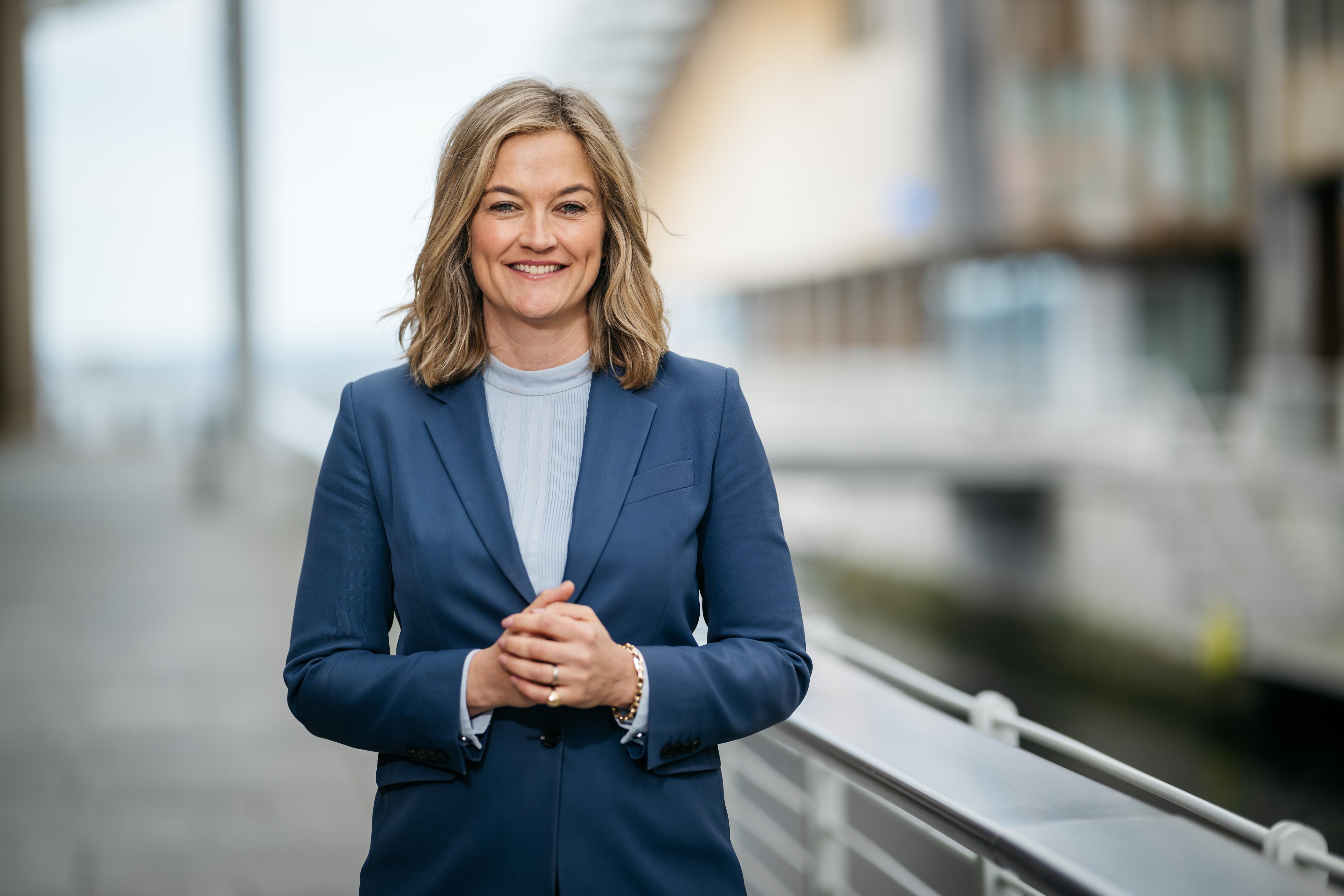
Adele Matheson Mestad. former Director of the Norwegian National Human Rights Institution, now partner at BAHR, is a new member of the Board at the Tinius Trust. "With Adele Matheson Mestad, we gain solid knowledge of human rights, freedom of expression and technological development, and above all, a wise mind with fresh perspectives," says Board Chair Ole Jacob Sunde.

28. mai 2026
Raoul Grünthal new Chair of the Tinius Trust
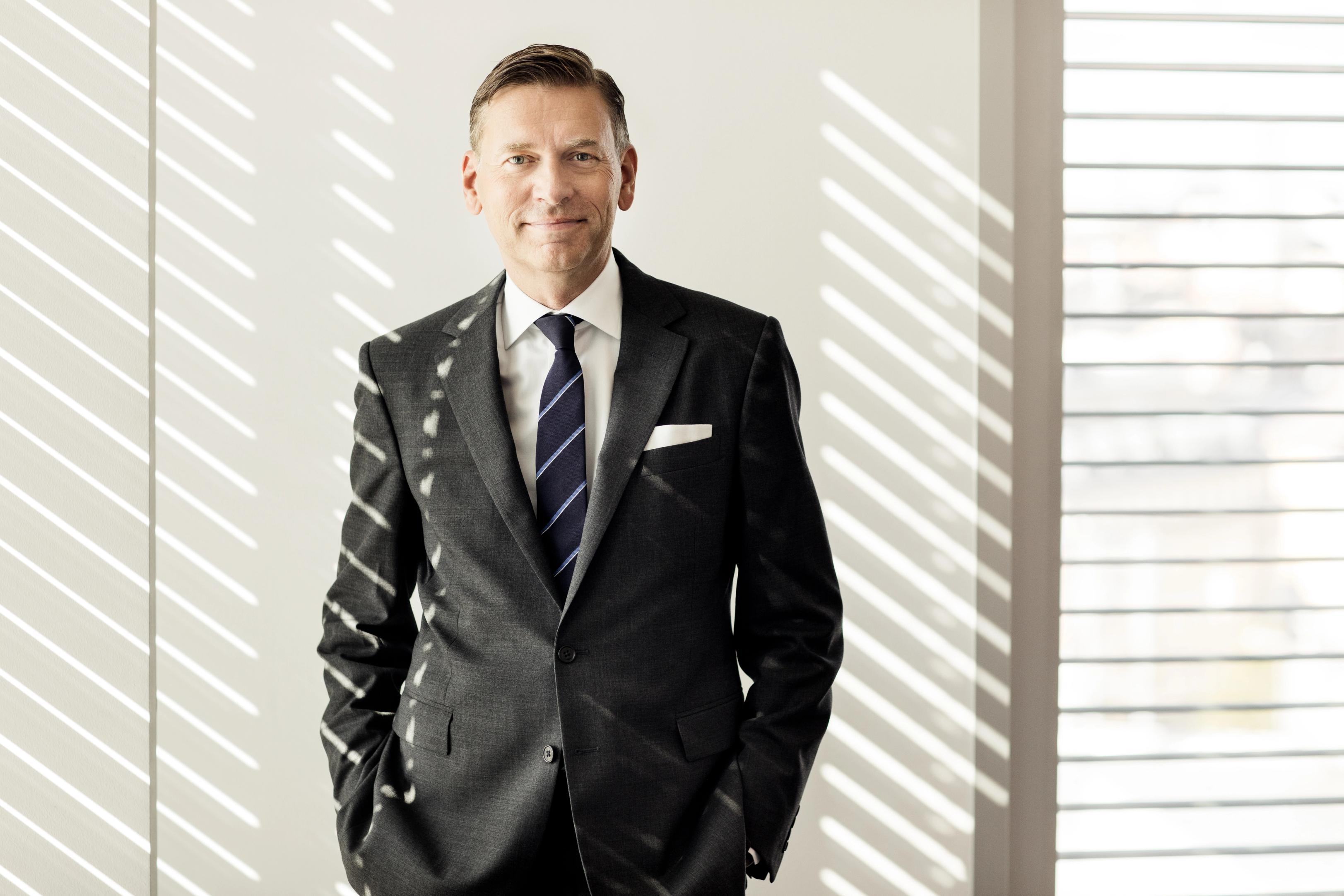
Raoul Grünthal has been elected as the new Chair of the Tinius Trust, effective 17 June. "I really look forward to leading this board in an incredibly exciting time," he says.

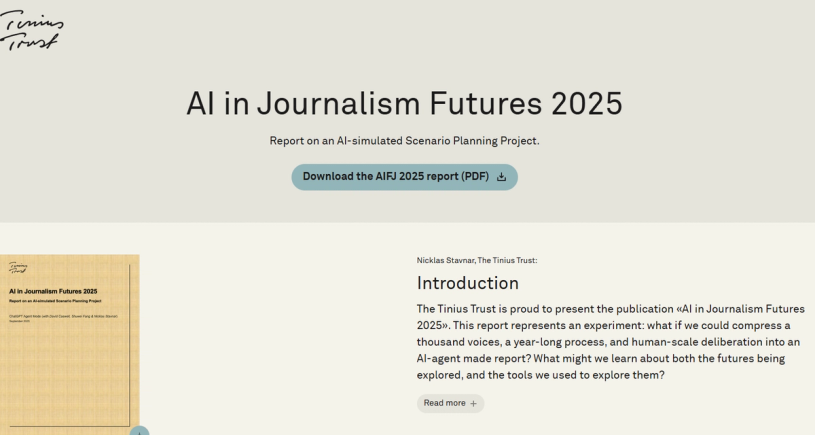
15. oktober 2025
New report: the future of media as seen by 1000 AI personas
The Tinius Trust launches AI in Journalism Futures 2025 - a groundbreaking experiment in which artificial intelligence has replicated a large-scale scenario planning project about the future of journalism. Read more here.