27. februar 2018
Challenges facing journalism

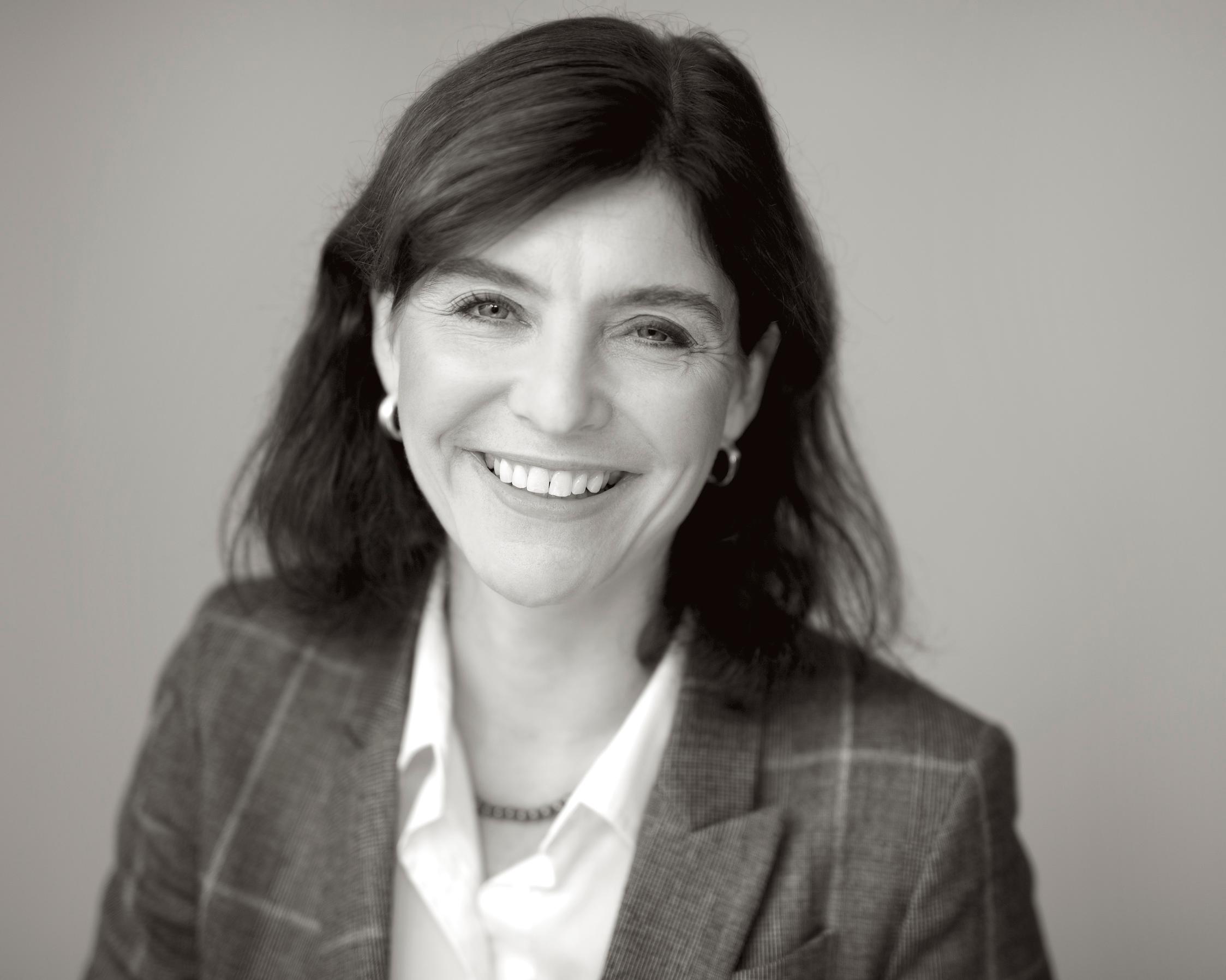
To become sustainable in the digital age, media companies need a strong mission and strong relationships with it’s readers, says […]
To become sustainable in the digital age, media companies need a strong mission and strong relationships with it’s readers, says Katharine Viner, the Guardian’s editor-in-chief.
In one of the newest series of the Guardian podcast “We need to talk about” political editor Heather Stewart pose questions on the future of journalism from readers all over the world to the Guardian’s editor-in-chief, Katharine Viner.
Kjersti Løken Stavrum, the CEO of the Tinius Trust, participated in the podcast by asking Viner the following questions:
Hello. My name is Kjersti Løken Stavrum. Im CEO of the Tinius Trust. The trust is the main shareholder of the global media house Schibsted, and we are of course vastly interested in the future of publishing, the future of journalism. And my question is what do you think will be the main success criteria for journalism to become part of that sustainable business model in the digital age? In Norway, of course, more and more media houses swich content into login-content and they report on positive development and positive figures, but we don’t know yet how willing will people be to pay. You have chosen another model where you leave it up to us to donate money. Do you think the Guardian is in a very special situation so we shouldn’t compare our national brands to your brand, or or do you think that that is something more media houses should do?
Kathrine Viner responded:
These are great questions from very illustrious members. I wouldn’t want to dictate how others do things, but I do think there is particular reasons why the Guardian is finding success with this new business model. I think what you need for a voluntary contributions model to work, as it seems to be doing for us, I think you need a very strong mission and very strong relationships with your readers.
So the mission – why are we here. And that is what I have tried to answer with this essay. But even before I did that, I think most people would have an instinctive sense of why the Guardian exists.
Something to do with opponing liberal values, holding the powerful to account, and a progressive identity which is obviously a very distinctive progressive daily news source that publishes as much as we do in all different source of areas, and is global. I mean that’s quite a rare thing.
But answering that question of why we exist, I think is useful for all media organizations.
And secondly, the relationships with the readers I think particularly if readers feel part of something. If they feel part of a community. If the news they read helps form their identity – if that is a key part for them, which it obviously is for the Guardian.
Beyond that, quality and distinctiveness are, I’m delighted to say, emerging as real signifiers of successful new organizations after looking a few years ago that there was just going to be commodified and all about gigantic scale. And so I think, aspiring to those is always good.
And I also think, and this is harder for the organizations to arrange although it might be useful for those starting out, I think the Guardians ownership model is an important part of this successful transition to a different kind of business model. In that we only have one shareholder, the Scott Trust.
No one is getting rich after the Guardian, as there is no proprietor. And so, as a result, we’re free to make long-term decisions that benefit the Guardian rather than short-term decisions that might benefit the shareholder.
And we are under no political influence from a proprietor. So that’s very liberating. And I think it has given us the space to try and invent a different kind of business model away from just advertising. Advertising on its own, is looking a very precarious business model for digital news organizations right now.
You can download the podcast “We need to talk about… the future of journalism” here. To listen to the dialogue between Kjersti Løken Stavrum and Katharine Viner, forward to 12.40.
Flere nyheter

29. september 2026
The Tinius Trust joins international effort on traceable information in the age of AI
The Tinius Trust is joining the venture studio Signals at Scale as a partner. The studio defines the problems to be solved in the emerging AI-mediated information ecosystem and funds those building systems that make the information reaching users through artificial intelligence possible to verify.

28. mai 2026
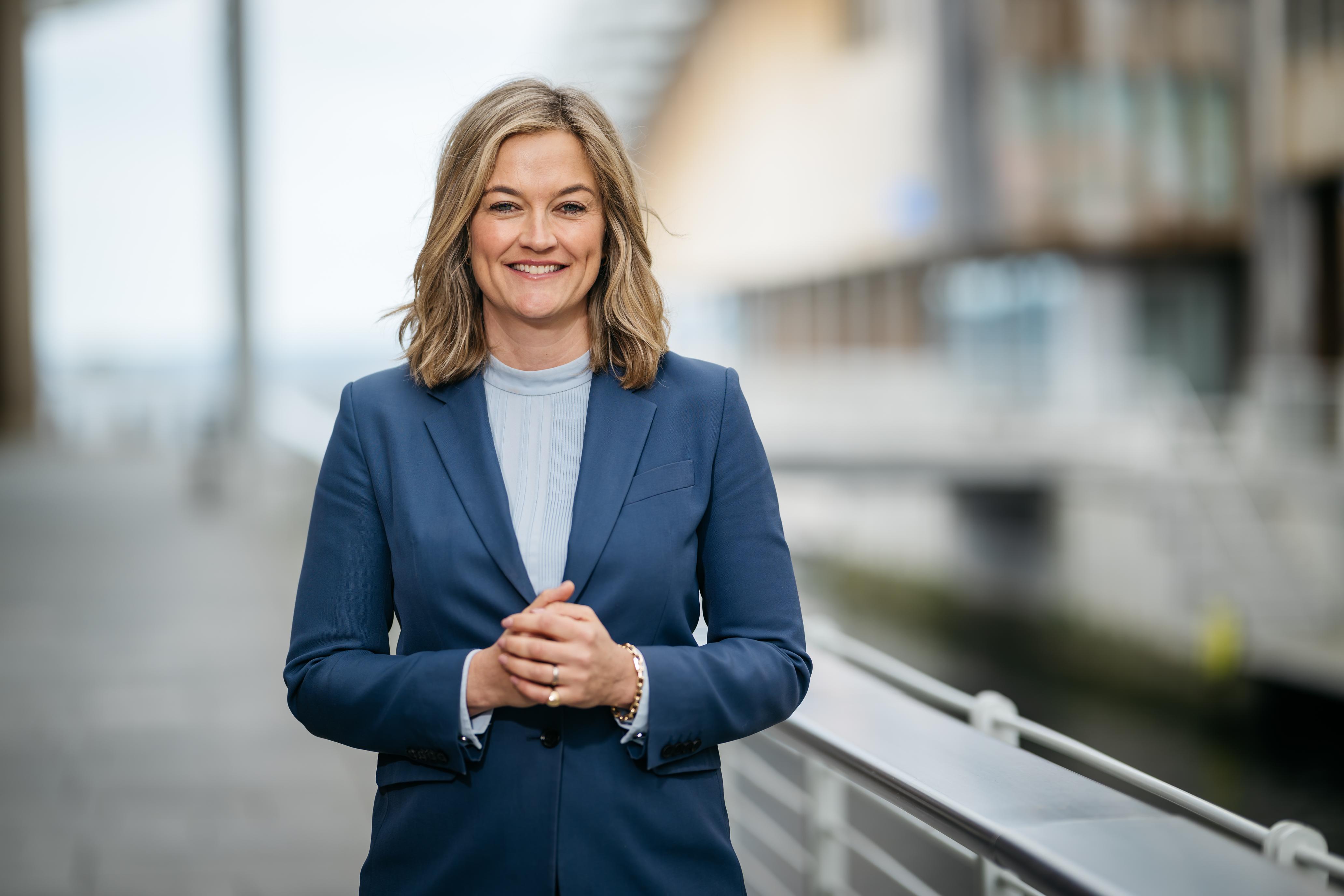
Adele Matheson Mestad joins the board of the Tinius Trust
Adele Matheson Mestad. former Director of the Norwegian National Human Rights Institution, now partner at BAHR, is a new member of the Board at the Tinius Trust. "With Adele Matheson Mestad, we gain solid knowledge of human rights, freedom of expression and technological development, and above all, a wise mind with fresh perspectives," says Board Chair Ole Jacob Sunde.

28. mai 2026
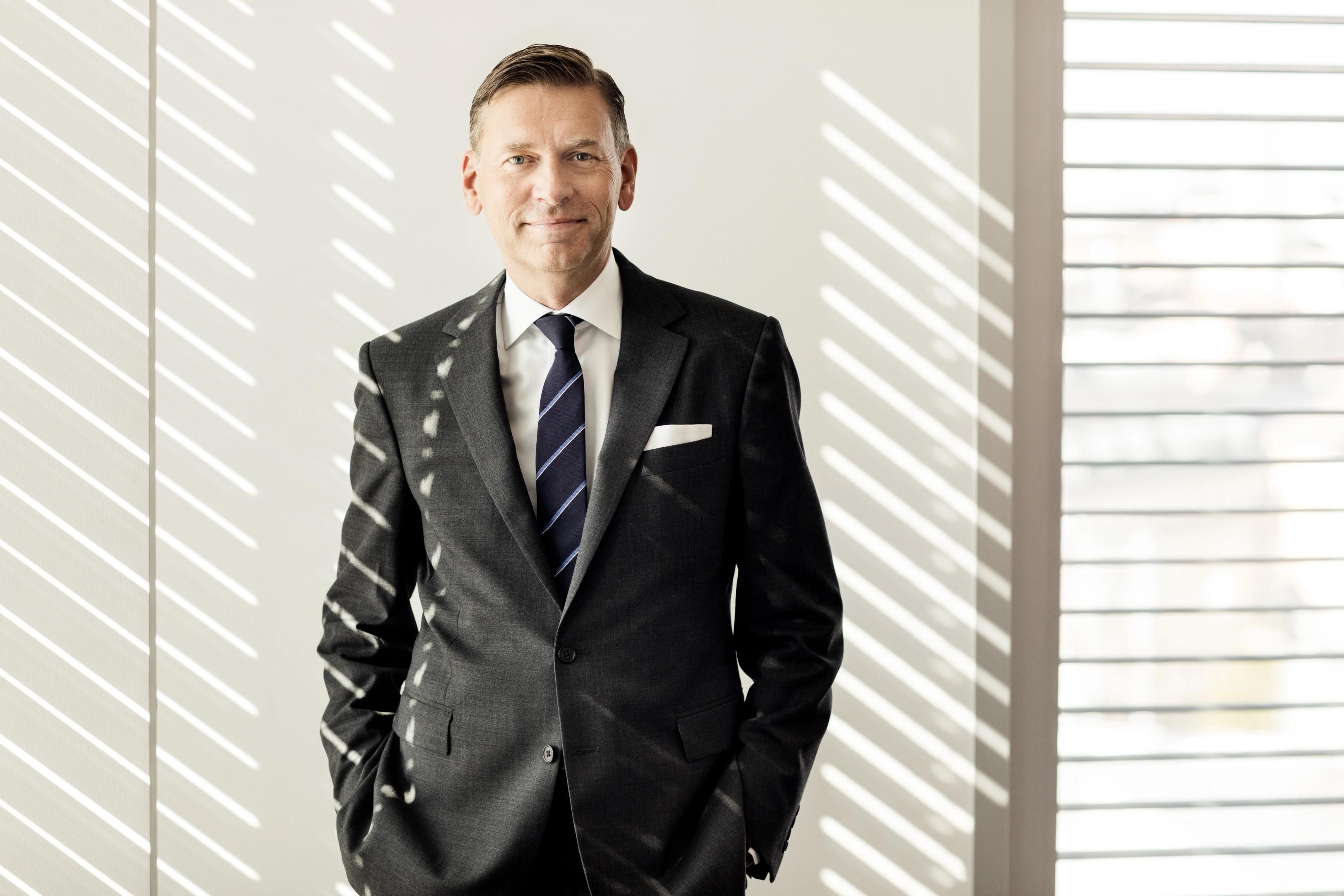
Raoul Grünthal new Chair of the Tinius Trust
Raoul Grünthal has been elected as the new Chair of the Tinius Trust, effective 17 June. "I really look forward to leading this board in an incredibly exciting time," he says.

15. oktober 2025
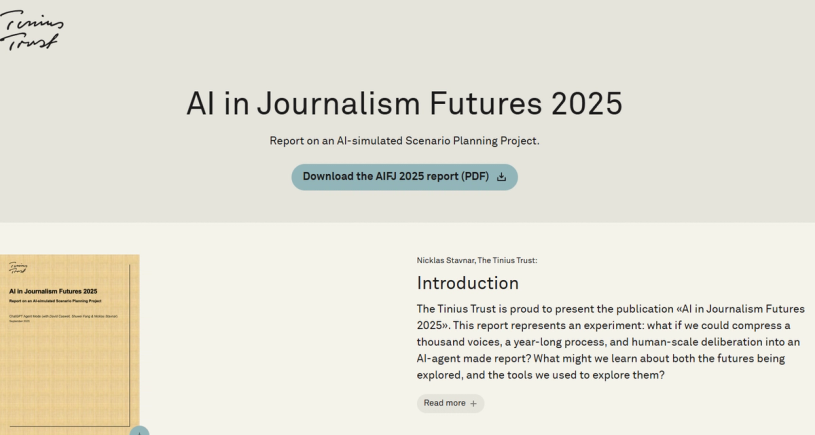
New report: the future of media as seen by 1000 AI personas
The Tinius Trust launches AI in Journalism Futures 2025 - a groundbreaking experiment in which artificial intelligence has replicated a large-scale scenario planning project about the future of journalism. Read more here.